Pages

Thursday, August 1, 2019

RENEWABLE ENERGY

RENEWABLE ENERGY

Aim: To compare the amount of gas that is produced from different types of biomass.

Material:
  1.   Plastic Bottle (3)
  2.   Mashed Banana
  3.   Horse Manure
  4.   Veggie Peels
  5.   Permanent Maker
  6.   Disposable Gloves
  7.  Funnel
  8.  Water
  9. Balloon
  10. Cup
Steps


  1.   Label all 3 bottles
  2.   Manure
  3.  Manure & Vegetable Peelings
  4.  Manure & Mashed Banana
  5.  Place 1cup Manure
  6.  1c Manure + 1c vegetable Peelings
  7.  1c Manure + 1c Mashed Banana
  8.  Fill the bottle with water
  9. Place a Balloon on top of the cup


A picture of three bottles with balloons on top, containing cow manure with vegetable peelings or mashed banana.
Energy science project


Investigation.


Research the following Biomass fuels. You will need to:

Write a definition of the fuel.
Write 8 sentences about the fuel. 
  • How is it made? 
  • It is made from organic things such as vegetable scraps,banana,wood,corn and even horse manure.
  • Where is it made?
  • Brazil,Sweden,Austria,United States 
  • What is it made with? 

  • What countries use it? 
  • What uses will it have in the future?  
Place 1 image of the fuel.

Biomass Fuel types.

Name: Agricultural crops and wood fuels.
Definition:
Agricultural crops such as silver grass and straw from cereal crops can be used as a fuel for production of heat. Herbaceous material has a different composition from wood and its burning must be handled differently from that of wood.

Research:
Wood energy is the use of wood fuel to produce heat or electricity.

Crop, In agriculture, a plant or plant product that can be grown and harvested extensively for profit or subsistence. By use, crops fall into six categories: food crops, for human consumption wheat, potatoes feed crops, for livestock consumption oats, alfalfa fibre crops

Uses:
Heating or electricity

Image:
Image result for Agricultural crops and wood fuels


Name: Animal waste.
Definition:
Pig Manure, Horse Manure, Cow Manure
Research:
Animal wastes are commonly considered the excreted materials from live animals. However, under certain production conditions, the waste may also include straw, hay, wood shavings, or other sources of organic debris.
Uses: Planting
Image:
Image result for Animal waste.
Name: Bio gas
Definition:
Ethanol
Methanol
Methane

Research:
Biogas means a gas produced by the anaerobic digestion or fermentation of organic matter. The organic matter can be manure, sewage sludge, municipal solid waste, biodegradable waste or any other biodegradable feedstock. Biogas is mainly methane and carbon dioxide.


Uses:
Vechiel,Cooking 
Image:
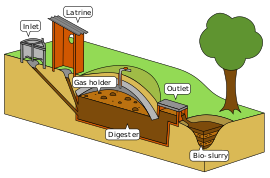
Image result for bio gas


Thursday, July 25, 2019

Zero Waste

Aim: To learn practical ways of recycling so that we can make our world a better place.


How can we prevent climate change though recycling these products?

Plastics:So we dont need to use coal or electricity
Cycling or walking:so we dont need to use gas or oils
Paper:less cutting down trees
Steel:Not going to burn as much coal burning it and releasing CO2 

Video questions:


What is Zero Waste?
one of the quickest and cheapest ways a community can immediately reduce climate impact

What can we do on the planet?

  1.  Reduse 
  2.  Reuse
  3. Recycle
  4. Repair 
  5. Redesign
What do we need to recycle?
Plastic, Paper, Metal and Glass

What does recycling do?
prevents less CO2 being released into the air  


How much of our rubbish is food scraps?
157,389 tonnes in New Zealand 
What does soil do to carbon dioxide in the atmosphere?
absorb the CO2 and stores the CO2


What is a carbon footprint?

The amount of carbon dioxide released into the atmosphere as a result of the activities of a particular individual, organization, or community.

How can you make your Carbon Footprint smaller?

not burn as much fossil fuel from factory and etc, also by sharing resorses and recycling.

ENERGY SAVING TIPS FILM


Name 4 of the tips.

  1.   Solar Power
  2.   reducing your rubbish that you put in the land fills
  3.   Turning off switches to things your not using
  4.    consuming less stuff


AT WHAT RATES DO DIFFERENT ITEMS DECOMPOSE?

MY INVESTIGATION.


Image result for rates of decomposition


Choose 5 items from the list and investigate them. 

You need to answer three questions.

Name: News Paper

  1. How long do they take to decompose/ 2-4 weeks
  2. What resource / fossil fuel are they made from?Trees
  3. How is this resource recycled?It gets put in the yellow bins
  4. How does this object contribute to climate change?cutting down trees and releasing CO2 when they are getting burned
Name: orange Peels

  1. How long do they take to decompose?3-6 months
  2. What resource / fossil fuel are they made from? Trees
  3. How is this resource recycled?put it in the green bin
  4. How does this object contribute to climate change? cutting down trees and releasing CO2 when they are getting burned
Name:Plastic Bag 

  1. How long do they take to decompose?10-20 years
  2. What resource / fossil fuel are they made from?oil
  3. How is this resource recycled?by putting it in the red bin
  4. How does this object contribute to climate change?fossil fuels are released when the plastic bags are being made
Name: Plastic 6 Pk Ring

  1. How long do they take to decompose?400-500 years
  2. What resource / fossil fuel are they made from?disposable packaging
  3. How is this resource recycled? by putting it in the recycling bin
  4. How does this object contribute to climate change?CO2 is being released by getting made 
Name: Glass Bottle

  1. How long do they take to decompose?500-Forever
  2. What resource / fossil fuel are they made from?liquid sand
  3. How is this resource recycled?put in the recycling bin
  4. How does this object contribute to climate change?Releasing CO2 into the air by making it

Monday, July 22, 2019

Water Cycle

Hurumanu: The Water Cycle


AIM: TO LOOK AT THE WATER CYCLE AND HOW CLIMATE CHANGE IS AFFECTING IT.

Definition:


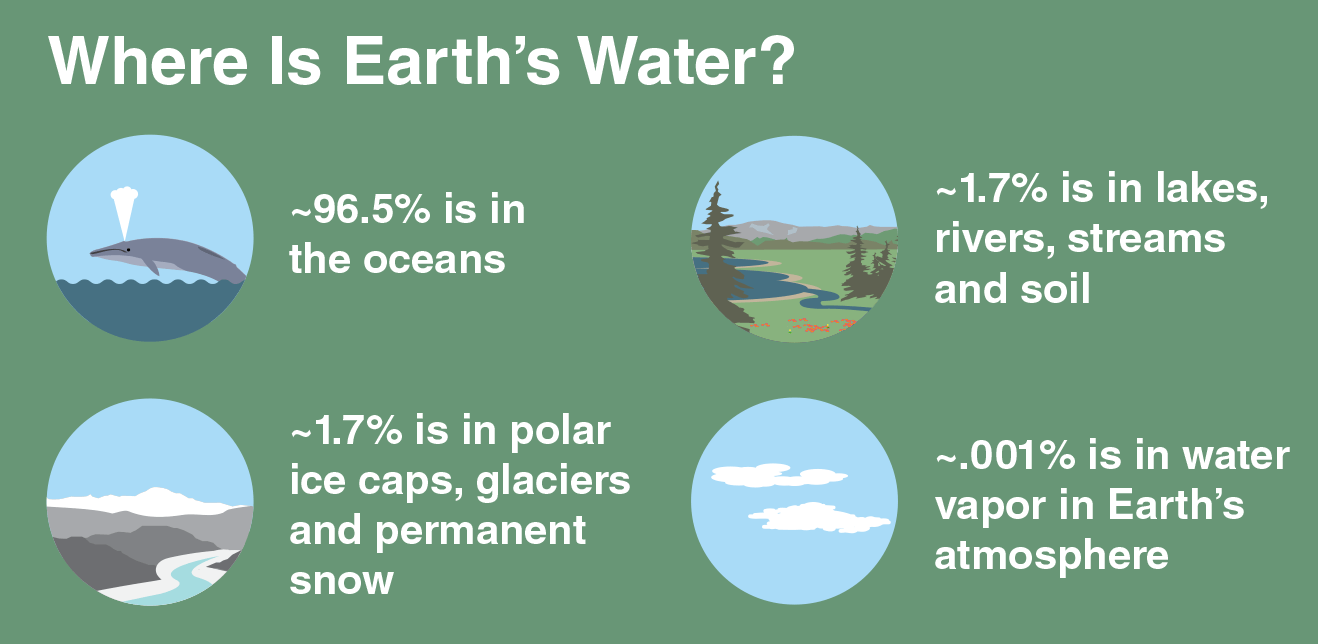
A green box with icons and white text. Text reads: Where is Earth's Water? 96.5 percent is in the oceans; 1.7 percent is in lakes, rivers, streams, and soil; 1.7 percent is in polar ice caps, glaciers, and permanent snow; 0.001 percent is in water vapor in Earth's atmosphere

Scientific words:


  • Evaporation. When water is heated by radiant energy it turns into water vapor.
  • Transpiration. Evaporation from plants.
  • Condensation. When water vapor cools, molecules join together and form clouds.
  • Precipitation. When clouds get heavy the waters falls as rain, sleet, hail, or snow.
  • Acidification: the action or process of making or becoming acidic.

We will be conducting an experiment that looks at the different ways that climate change is affecting the water cycle.
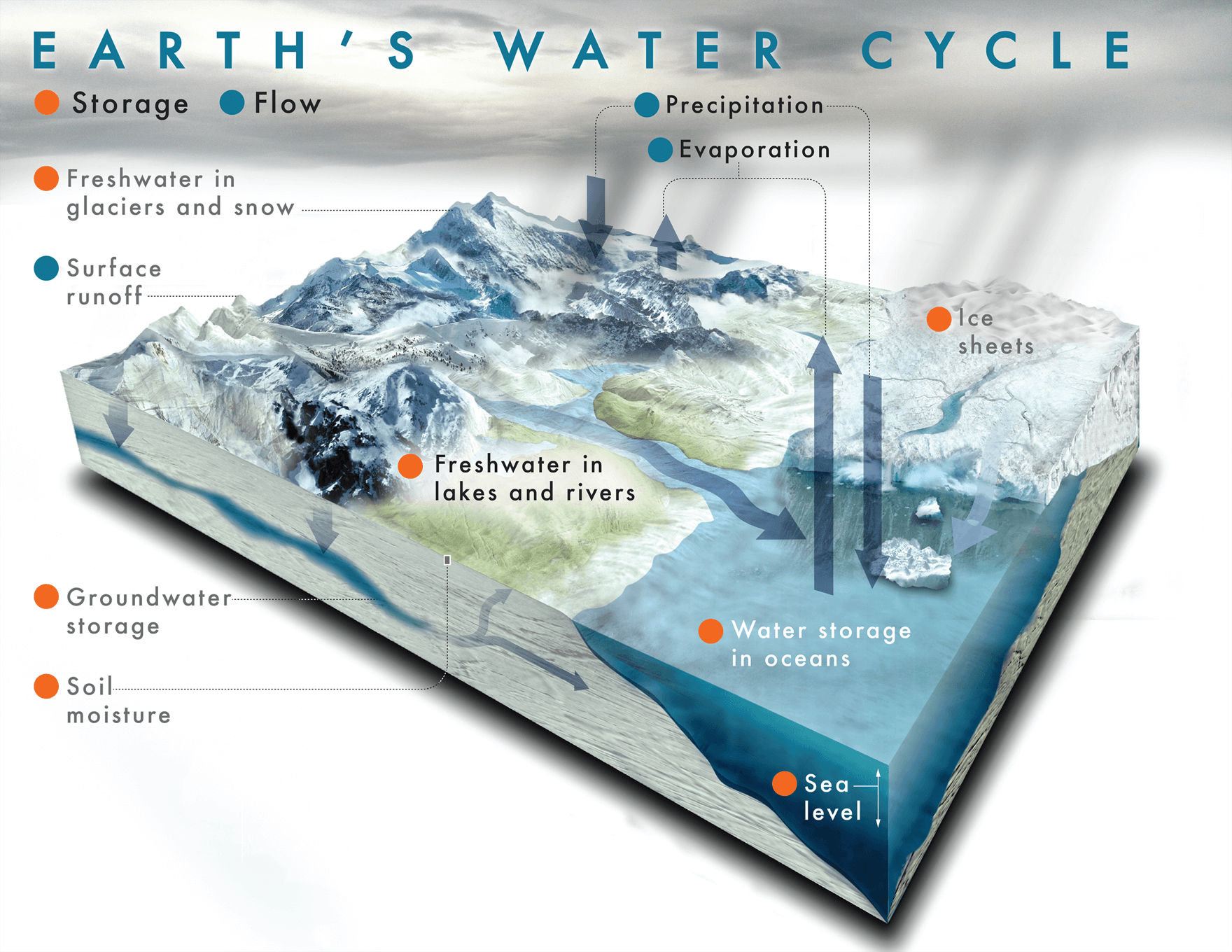
An illustration of the water cycle showing how water travels from rivers and streams to clouds to snow and back again

THE WATER CYCLE EXPERIMENT

Bag 1: Normal Water cycle
Bag 2: Water cycle with CO2 added: like Oceans in climate change
Bag 3: Water cycle with ice added: like Antarctica in climate change

Material:

  1.  plastic bag
  2.  water
  3.  food coloring
  4.   sand or soda water

Steps:

  1. Draw the water cycle on the plastic bag. 
  2.  Put one cup of liquid into the bag.
  3. Put 2 drop of food coloring in the plastic bag with the liquid. 
  4. If soda water was used, place a piece of litmus paper at the top.
  5. Seal the bag and hang it up in the sun.


The Water Cycle: Bag 1
CO2 Water Cycle: Bag 2
Acid
Desert Water Cycle
Bag 3
Does it cycle?
Yes YesYes
Amount of Water
222
Acidity
121

Key: Water and acidity amount: 1 = none 
2 = small drips
3 = large drips

Other comments:

1. Water cycle in Bag 1 had no acidity
2. The water cycled in bag one
3. The water formed in small drops in Bag 1

1. The water cycled in bag 2
2. The water formed in small drops in bag 2
3. Water cycle in bag 2 had small drops of acidity

1.The water formed in small drops in bag 3
2.Water cycle in bag 3 had no acidity
3. The water cycled in bag 3


Conclusion:

The water cycle in bag 1 and 3 had no acidity.In all 3 bags formed small drops.Also in bag 1 2 and 3 the water cycled.


Draw a labelled diagram of the Water Cycle

Water cycle words:
  1. Precipitation
  2. Hurricanes
  3. Acid rain
  4. Evaporation
  5. Carbon Dioxide
  6. Water
  7. Deforestation
  8. Water vapor
  9. Transpiration
  10. Flooding


TODAY YOU WILL BE INVESTIGATING THE EFFECTS THAT CLIMATE CHANGE HAS ON THE WATER CYCLE.

  1. Using your SOLO hexagons poster write a paragraph about the different aspects of climate change.
  2. Write about the following Climate Change concepts:
You can do these by powerpoint, embedding a movie , on your blog, on a doc or any other form of presentation. It is up to you.

ACIDIFICATION: HOW DOES CLIMATE CHANGE CONTRIBUTE TO THE ACIDIFICATION OF OUR OCEANS?


Picture:


Diagram of how it affects the water cycle.


DEFORESTATION: HOW DOES DEFORESTATION AFFECT CLIMATE CHANGE?


Picture:


Diagram of how it affects the water cycle.


ICE CAP MELT: HOW DOES ICE CAP MELT AFFECT CLIMATE CHANGE?


Picture:


Diagram of how it affects the water cycle.


WATER VAPOUR: HOW DOES CLIMATE CHANGE CONTRIBUTE TO WATER VAPOUR AND EVAPORATION?


Picture:


Diagram of how it affects the water cycle.


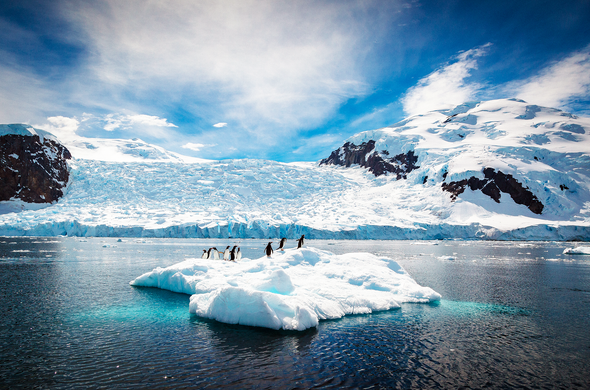
Definition:Ice caps are formed when snow that falls builds up and does not melt in the warmer weather. As time passes the layers of snow become layers if ice as they become compressed.
The temperature of the earth has increased by one half of a degree Celsius in the last 100 years, which might seem small but it can have drastic effects on the earth as a whole. This temperature change can melt ice caps and cause water levels to rise globally.
Image result for ice cap meltingImage result for ice cap melting

While sea ice exists primarily in the polar regions, it influences the global climate. ... When warming temperatures gradually melt sea ice over time, fewer bright surfaces are available to reflect sunlight back into the atmosphere. More solar energy is absorbed at the surface and ocean temperatures rise.


Ocean acidification is the decrease in the pH and increase in acidity of the Earth's oceans. It is caused by the increase of carbon dioxide that humans have put into the atmosphere. More than 30% of the carbon dioxide in the air goes into the oceans. Therefore, when carbon dioxide in the atmosphere increases, the carbon dioxide in the ocean increases, too.
When carbon dioxide enters the oceans, it makes it more acidic.

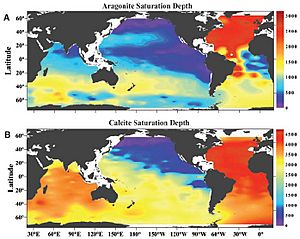
CalciumAragoniteSaturation
The reason is that adding carbon dioxide to water is like adding a few drops of lemon juice. It makes the water a little acidic.
In the past 200 years, the ocean has become much more acidic. In that time, it has absorbed 500 billion tons of carbon dioxide from the atmosphere. It’s hard to imagine that amount of a gas. 

Deforestation is the permanent destruction of forests in order to make the land available for other uses
Image result for deforestationImage result for deforestation
Deforestation is when forests are destroyed by cutting and not replanted. Sometimes deforestation happens when people change the land into farms, ranches and cities. A lot of deforestation is caused by the removal of all the trees from a forest for wood or fuel. Without the forest, the habitats of the animals are lost and many animals die. It also results in global warming (climate change).

Water vapor is water that is in the form of a vapor, or gas. It is a part of the watercycle. When liquid water is heated to boiling temperature, 100 degrees Celsius, it all turns into vapor.
Image result for water vapourImage result for water vapour


 Water vapor can also be produced directly from ice this is called Deposition. Steam is water vapor, but clouds are liquid water. Water vapor affects weather conditions. Water vapor is found in most of the air. In the cold, breathing out causes the water vapor breathed in to freeze.Water vapour weighs less than air, which is part of the reason clouds float high in the sky.